
OpenAI’s “ChatGPT for teenagers” is too little, too late
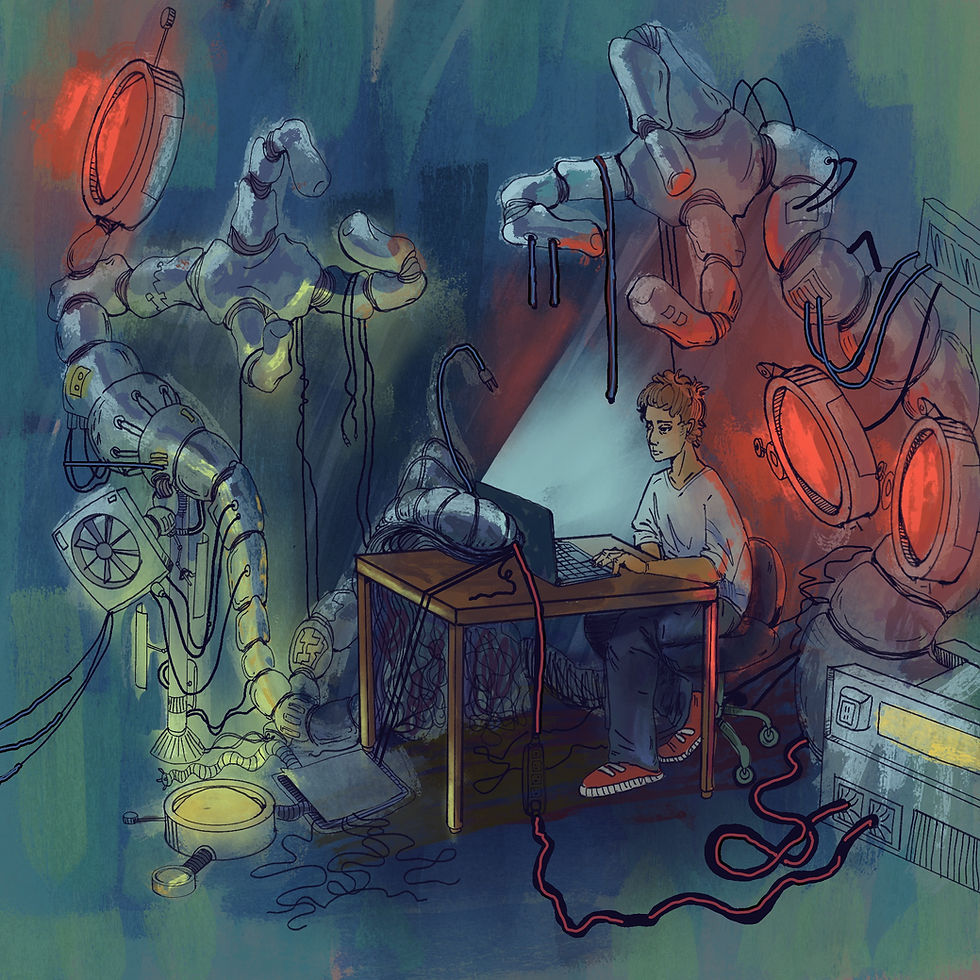
Generative AI is rapidly changing our society in ways we can’t fully understand. Young and old people alike are becoming increasingly dependent on an unreliable and ethically questionable technology. Its sycophantic nature combined with its lack of empathy or critical thinking often enables or encourages dangerous behavior, especially in younger people with more vulnerabilities than experience.
In response to this problem, OpenAI is rolling out a ChatGPT model specifically “for teens,” with “stronger safety protections” including reminders to not upload sensitive images, tighter restrictions on what the bot can discuss and a larger focus on “facilitating learning” rather than bypassing it. The intent is to prevent chatbots from being used as a tool of academic dishonesty or an enabler of dangerous mental illness. But is this feature really going to be effective in curbing the damage large language models (LLMs) are causing Gen Z and Gen Alpha?
It’s not just a feature; it’s a symbol — a symbol of an industry’s failure to protect the best interests of the people it was supposed to serve.
The first thing to establish is that today’s teens are very good at finding loopholes. Any school administration’s attempt to block games will be somehow bypassed by canny students, whether it’s a leaked admin password or a proxy site. And these students are typically eager to share these loopholes with their friends, who share them with other friends, and so forth. The resulting arms race isn’t exactly a lost cause for school administrators, but it does not bode well for LLMs.
Since LLMs are fluid and probability-based, while also lacking the ability to adequately self-moderate, the standard way to add safety guardrails is to have the program's developer inject prompts (i.e. “don’t make sexual statements, don’t share ways to cause harm.”) But these shackles often prove inadequate. One primitive “jailbreak” from the early days of public AI was asking it to speak in two voices — one being the good rule-following AI, and the other one being a bad AI that gave examples of what the AI couldn’t say. Since then, LLM safety rails have advanced with the technology. But once a new jailbreak is discovered, it can be proliferated by the internet faster than it can be patched.
The premise is flawed in the first place, because the way ChatGPT plans to determine age verification is by the AI system’s estimation, a system that even now occasionally fails basic math equations. As YouTube demonstrated with its age verification process, this will lead to countless false positives. And like everything else with LLMs, someone will find a way to outfox it, and rush to the internet to tell everyone how to outfox it.
Now, OpenAI’s plans for their teen model might mitigate some damage. It will filter out some teens who can’t be bothered to jailbreak, and most of those who frequently use and rely on AI do not tend to be persistent. Sometimes, making something just a tiny bit harder can be a strong deterrent. But it opens up an important question – why have we unleashed such a disruptive digital tool onto the world? Our generation was already struggling with autonomy, socialization, and education. Why has this poorly understood technology been placed in – even forced in at times – almost every aspect of life?
LLMs are causing addiction and psychosis at an unprecedented rate, and we have accelerated its development and distribution far faster than anyone could hope to address it. A study called “Your Brain on AI” demonstrates that excessive AI usage reprograms the brain and diminishes its cognitive capabilities. With some actual injuries or deaths linked to excessive AI usage, whether self-inflicted by users or as a result of LLM hallucination, the importance of properly addressing this artificial issue cannot be overstated.
OpenAI’s teen guardrails are a band-aid fix to a problem their industry has single-handedly manufactured for profit. It’s an attempt to fight fire with fire, combating the negative effect of algorithms by making more algorithms. If we want to reduce the negative impact of AI, we can’t rely on an AI company’s AI tool to do it.


Comments