
Backroomsession: A horrifying look into the minds of Gen Z

This summer, two horror movies directed by Gen Z creatives who both got their start on YouTube were released. Many people thoroughly enjoyed both of these movies, based on their impressive box office and critical success. The success of these two movies and the fact that they are some of the first movies produced by our generation makes them fascinating to contemplate. Both films explore a wide variety of themes, such as post-COVID loneliness and the rise of artificial intelligence.
Directed by 26-year-old sketch comedian Curry Barker, “Obsession’s” premise is a twist on the classic monkey’s paw story, where the true horror doesn’t come from the malevolent wish-granting artifact or its consequences, but from the cowardice and selfishness of its user. “Backrooms,” on the other hand, is a film adaptation of 21-year-old Kane Parson’s YouTube series of the same name. That series itself is based on the 2019 “creepypasta” (an online genre of short horror fiction) of an endless extradimensional labyrinth formed entirely out of empty office rooms. The original post is considered one of the pioneer works in what is now known as “liminal horror,” and Parson’s series is widely considered to be its best iteration.
Despite the differing premises, these movies share a lot of common thematic ground. The idea of isolation, especially self-imposed isolation, is extremely important in both of these films. In “Obsession,” Bear starts the movie incredibly lonely, pining for a girl who (probably) doesn’t like him back and losing the cat that provided the only companionship he had in his home. But he’s so fixated on Nikki, he turns a blind eye to both Sarah’s concern for him and her romantic advances. “Backrooms” features the false protagonist Clark, who the story initially frames as the main character, but eventually reveals to be the antagonist, while his therapist ends up becoming the actual protagonist. Clark pushes everyone around him away with his aggressive tendencies, blaming everyone but himself for his failures and taking it out on the ones who love him the most. He eventually chooses to live alone in the distorted world of the Backrooms rather than try to change for the better and become more pro-social.
In that regard, both movies are also a feminist critique, although “Obsession” is a lot more overt about it. Both movies feature men who wallow in their own pity and never take accountability, which leads them to directly or indirectly cause harm to the women in their lives. They both play the victim in every situation they find themselves in, stifling every chance they get at character development or even just escaping the horrifying situations they get themselves into.
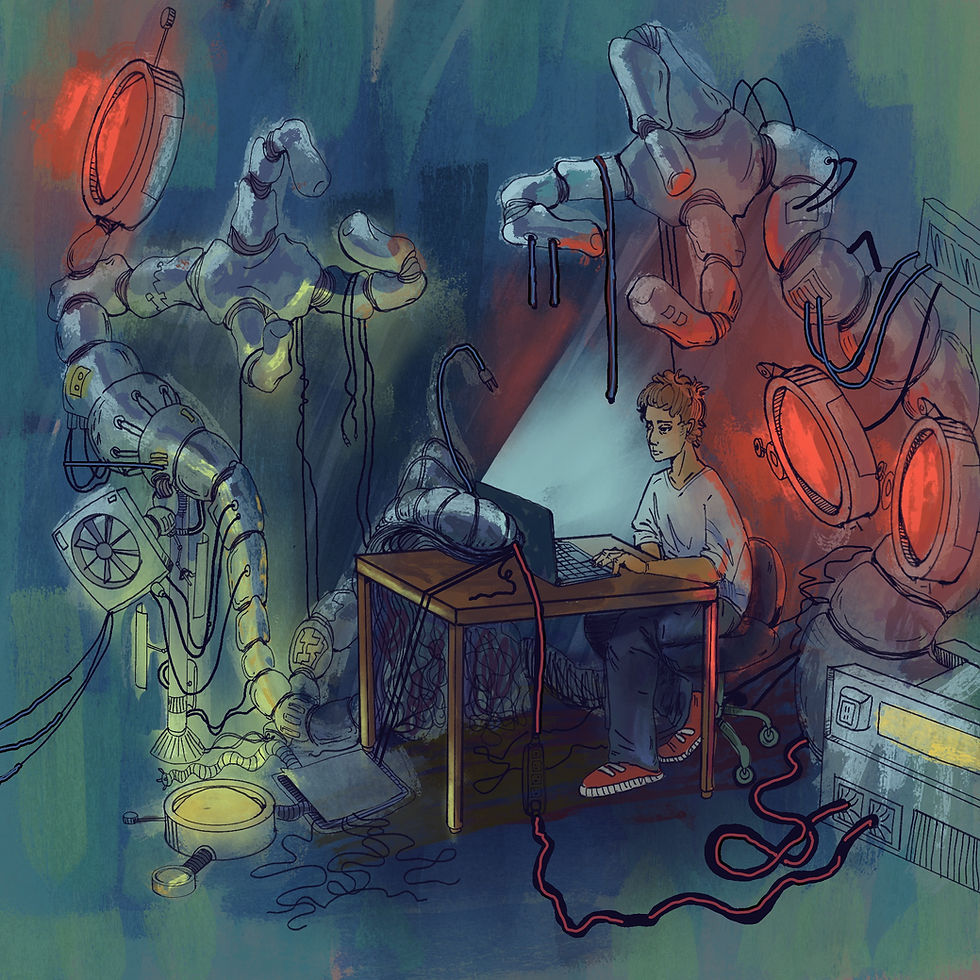
The movies also both comment on the forced proliferation of generative AI and how that is terrifying in its own right, with how it causes harm. The wish version of Nikki, with its inhuman thought processes and sycophantic behavior, can easily be connected to the concerning rise of “AI girlfriends” (and boyfriends) that feed into the maladaptive emotions of isolated individuals. Comparatively, the mechanics of the Backrooms reflect the mechanics of AI image generation. The extradimensional space remembers what it's exposed to, and tries to recreate it, but always fails to understand it. So it creates rooms, furniture and living beings that might look real at first glance, but fall apart upon closer inspection.
Both of these supernatural forces are not inherently malevolent. They become dangerous because they reflect the broken psyches and selfish desires of the people who first come in contact with them. The One Wish Willow is implied to grant most wishes normally, and it only goes wrong because Bear’s wish can only function by overriding Nikki’s autonomy. And most of the Backrooms’ creations are weird but functionally harmless. Only when it tries to recreate Clark, a bitter and angry man, does it create the aggressive monstrosity colloquially known as “Captain Clark.”
If you connect the dots between these movies, they begin to paint a fascinating, if somewhat bleak picture of Gen Z’s perspective on the world they’ve inherited and the culture we’ve developed in response. It’s a world where we’re more isolated from other humans than ever, a world where entitled men destroy lives (including their own) and blame everyone else for it and a world where mindless algorithms sabotage and destroy what little communication and trust we have in the world. But with their relatively small budgets (“Backrooms” at an estimated 10 million USD, and “Obsession” at a remarkably tiny $750,000), they also represent hope for the underdog and for independent creativity to shine, even in an environment as corporate as Hollywood.


Comments