Ellen Eisenberg to retire, reflects on time at Willamette
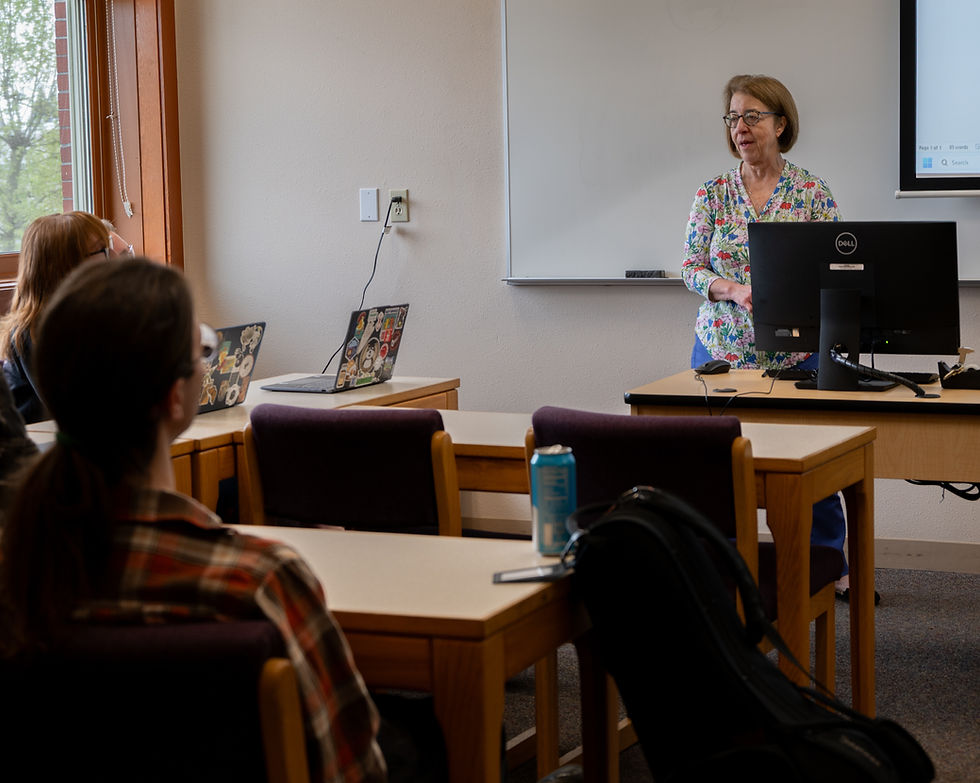
At the end of this semester, history professor Ellen Eisenberg will retire after 36 years at Willamette.
During her time here, she published six books and 21 journal articles and book chapters. She’s received a wide array of grants and honors and maintained a rich and ongoing history of service and community involvement.
She was born and raised in Maryland in the suburbs outside of D.C. Before pursuing a Ph.D. in history at the University of Pennsylvania, Eisenberg graduated from Carlton College in 1985 with an American studies degree.
Initially more interested in the process of research and writing papers, she discovered her interest in teaching as a TA during graduate school. Classes of 250, however, didn’t excite her — there was no personal aspect. So she started looking for jobs at liberal arts colleges and universities and was hired tenure-track at Willamette right out of graduate school in 1990.
At the time — and still now — there were only a few other professors of history at Willamette, giving significant historical ground for professors to cover. Her first classes focused on European immigration and American Jewish history, reflecting her academic expertise.
As a more diverse student population entered her classes, they became increasingly interested in a more diverse history, when, at the time, there were no classes on African American history. Now, most of her research revolves around the American West, and her latest courses resemble little of what they were when she started.
Her last-ever class gives students the chance to create a new history of Willamette University through much of their own, guided research. There, students study a wide range of topics, from the original Methodist missions to queer life on campus from the ’80s to ’90s.
The opportunity to teach this class excited Eisenberg, as she believes the university needs to provide a more critical history of itself.
Throughout her many years, much has changed. Eisenberg said she’s noticed a shift in the technology present for younger generations, which worries her.
“I have, for a long time, preached to students a kind of ‘slow history’ movement,” she said. “You get a source, you read it, and you think about it, and you don’t know what the heck you’re gonna say in your paper.”
When the brain has time to digest the information handed it, that’s when those “Aha!” moments spring forth, she believes.
“I think that idea of finding a space where you can have those epiphanies, where you can become interested in something and pursue it,” is crucial to student learning, if not a way of life, she said.
AI is a source that might help with deadlines but certainly disrupts that space. She fears the present situation where “anytime you get stuck, you can push a button, and there is the thing to help you.”
It can deprive students of the satisfaction of having worked through something themselves. She’ll continue to nurture this philosophy as she moves forward.
Eisenberg’s work isn’t stopping after her “graduation” from Willamette. Among her plans of travel and getting together with her own college friends, she’ll continue involvement with local public-facing historical organizations, like the Bush House and the Willamette Heritage Center, where she’ll continue to nurture her philosophy of “slow history” in everyday life.


Comments